Tile Patterns Lily: Floral Ornament Evaluation
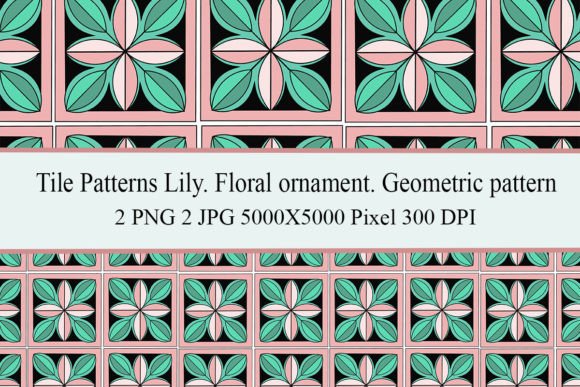
In the landscape of digital design assets, finding a balance between intricate detail and versatile application is often a challenge. Tile Patterns Lily. Floral Ornament represents a specific category of high-resolution graphic resources designed to bridge the gap between traditional decorative art and modern digital production. This collection features floral ornamentation integrated into geometric patterns, offering a unique aesthetic that blends organic shapes with structured layouts. For designers, crafters, and content creators, understanding the specific capabilities and limitations of such a resource is essential before integrating it into professional workflows.
Understanding the Resource Composition
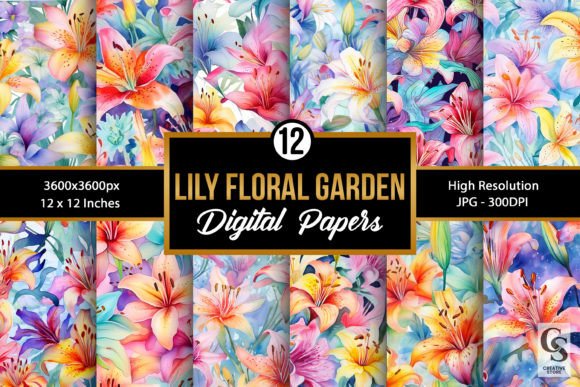
The core of this asset package lies in its dual nature as both a floral motif and a geometric tile. The design utilizes a repeating structure, which allows the pattern to extend infinitely without visible seams. This characteristic is fundamental for applications requiring large surface areas, such as wallpaper or fabric printing. The inclusion of beautiful decorative abstract tile patterns suggests that the imagery does not rely solely on realistic botanical illustrations but incorporates stylized elements that fit within a broader abstract context.
The technical specifications provided indicate a robust file format suitable for high-quality output. The package includes two distinct PNG files and two JPG files. Crucially, these files are generated at a resolution of 5000x5000 pixels with a density of 300 DPI (dots per inch). In the printing industry, 300 DPI is the standard benchmark for sharp, clear physical prints. A dimension of 5000 pixels ensures that the image can be scaled significantly while maintaining clarity, making it viable for large-format projects like banners or wall murals without pixelation.
Primary Applications and Use Cases
The versatility of Tile Patterns Lily. Floral Ornament makes it a candidate for a wide array of creative endeavors. Because the pattern is designed to be seamless, it serves as an ideal background texture. Designers frequently utilize such assets for:
- Print-on-Demand Products: The high resolution supports printing on various substrates, including t-shirts, pillows, and tote bags. The floral theme appeals to markets seeking home decor and apparel with a soft, elegant aesthetic.
- Stationery and Greeting Cards: The ornamental quality fits well within the requirements for wedding invitations, holiday cards, and scrapbooking layouts where detailed backgrounds enhance the focal text or images.
- Digital Art and Framing: Artists can use the pattern as a base layer for frame artwork, adding depth to digital paintings or creating textured backgrounds for social media graphics.
- Merchandise Stickers: The clean lines of the geometric aspect ensure that small-scale reproductions, such as stickers, remain legible and visually appealing.
For users looking to personalize their projects, the availability of both raster formats (PNG and JPG) offers flexibility. PNG files typically support transparency, which allows the pattern to be overlaid on different colored backgrounds without a white box surrounding the image. Conversely, JPG files are generally smaller in file size and easier to manage for web-based previews or quick drafts.
Evaluating Benefits and Tradeoffs
When evaluating Tile Patterns Lily. Floral Ornament, several benefits stand out. The primary advantage is the high quality inherent in the 300 DPI specification. Many free or low-cost pattern libraries offer images that degrade quickly when enlarged. With 5000x5000 pixels, this resource minimizes the risk of blurriness, providing a professional finish that justifies the investment for commercial projects.
However, there are tradeoffs to consider regarding the file types included. While having two PNGs and two JPGs provides variety, the user must verify the specific content of each file. If all four files are variations of the same visual design, the utility is limited compared to a set containing completely different colorways or layout structures. Additionally, being raster-based rather than vector-based means the pattern cannot be infinitely scaled without any loss of quality beyond the initial 5000-pixel limit. If a project requires scaling the pattern to a billboard size larger than what the current resolution supports, the image may eventually soften.
Situational Fit and Alternatives
This resource is a strong fit for individuals who need immediate, high-resolution textures for physical production or digital composites. It is particularly suitable for hobbyists and small business owners who require "easy to use" assets that do not demand extensive editing skills. The pre-made nature of the tiles saves time compared to creating a seamless pattern from scratch using illustration software.
Conversely, alternatives may be worth considering under specific circumstances. If a project involves complex manipulation where the individual flowers need to be isolated, moved, or recolored independently, a vector format (such as SVG or EPS) would be superior. Raster patterns like Tile Patterns Lily. Floral Ornament lock the elements together; editing them requires masking or painting over them, which can be labor-intensive. Furthermore, if the design style is strictly minimalist or requires precise geometric precision that deviates from the "floral ornament" description, a purely geometric vector library might offer better control.
Another consideration is the licensing terms. While the prompt mentions the designs are for many creative projects, the specific commercial rights (e.g., whether one can sell unlimited products featuring the pattern) must be verified. Some licenses restrict the number of end-products or prohibit resale of the pattern itself as a standalone digital file.
Decision-Making Insights
To determine if this asset aligns with your goals, assess your workflow needs against the file specifications. If your primary goal is rapid deployment of a beautiful, high-resolution background for print media, the 300 DPI and 5000x5000 dimensions are significant advantages. The inclusion of multiple file formats suggests an intent to cater to both transparent layering needs and standard compression requirements.
Readers should also evaluate the aesthetic compatibility. The description highlights "floral ornament" and "geometric pattern." If your project requires a highly naturalistic flower arrangement, this might feel too stylized. However, if the goal is a decorative, abstract look that evokes nature through structure, the pattern is likely an excellent match. The ability to personalize projects with ease implies that the pattern integrates well with other design elements, allowing for customization without clashing.
Ultimately, Tile Patterns Lily. Floral Ornament serves as a practical tool for expanding creative possibilities. By offering high-resolution data in accessible formats, it lowers the barrier to entry for producing professional-grade materials. Whether for a personal scrapbook or a commercial line of mugs and stickers, the decision to use this pattern should hinge on the necessity for high-fidelity reproduction and the desire for a seamless, repeatable floral design.