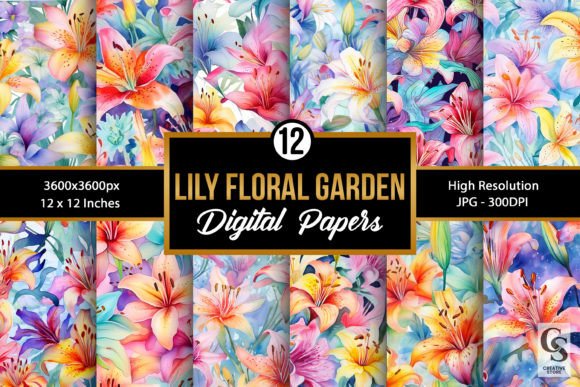
Pastel Rainbow Watercolor Lily Patterns: A Strategic Asset for Creative Workflows
In the landscape of digital design and content creation, visual consistency is often the differentiator between a project that feels amateurish and one that resonates with an audience. Pastel Rainbow Watercolor Lily Patterns represents more than just a collection of pretty images; it serves as a foundational asset for professionals seeking to elevate their branding, streamline their production pipelines, and add a touch of organic elegance to their digital or physical deliverables. For creators ranging from small business owners to freelance marketers, integrating high-quality, seamless patterns into their workflow can significantly reduce production time while enhancing the perceived value of the final output.
This specific set of 12 digital papers offers a unique intersection of soft aesthetics and technical precision. The pastel rainbow palette provides a versatile color spectrum that appeals to a broad demographic, while the watercolor lily motif introduces a natural, hand-crafted feel that stands out against rigid geometric trends. When approached strategically, these assets become tools for efficiency rather than mere decorations.
Integrating Digital Assets into Production Pipelines
The true value of Pastel Rainbow Watercolor Lily Patterns lies in how seamlessly they can be integrated into existing workflows. For a planner publisher or a stationery entrepreneur, the process begins long before the first page is printed. It starts with asset organization. Having all 12 files contained within a single zip file ensures that version control remains simple and that no critical components are lost during the transfer from vendor to workspace.
When preparing for a new product launch, such as a line of greeting cards or a seasonal journal collection, having access to high-resolution (300dpi) JPG files sized at 3600 x 3600 pixels allows for immediate scalability. This resolution is critical for maintaining quality across various mediums, from large-format wall art to intricate tumbler wraps. By keeping the source files organized, designers can quickly prototype layouts without worrying about pixelation or re-rendering delays.
The workflow typically follows a logical progression: selection, adaptation, and application. First, the creator selects the specific pattern that aligns with the brand voice or project theme. Next, the pattern is adapted using standard design software to fit the dimensions of the target medium. Finally, the pattern is applied as a background, a texture overlay, or a primary visual element. This streamlined approach minimizes the cognitive load on the creative team, allowing them to focus on strategy and messaging rather than basic graphic generation.
Applications Across Diverse Professional Sectors
The versatility of these seamless patterns makes them applicable across a wide array of professional domains. For educators and bloggers, Pastel Rainbow Watercolor Lily Patterns can serve as engaging headers for digital newsletters, printable worksheets, or social media graphics. The soft aesthetic reduces visual fatigue, making educational materials more inviting for students of all ages.
- Small Business Owners: Use the patterns to create branded packaging inserts, gift wrapping designs, or custom labels for handmade products. This adds a layer of unboxing experience that customers appreciate and share.
- Freelance Marketers: Incorporate the textures into presentation decks or pitch documents to differentiate proposals from competitors who rely on standard corporate templates.
- Stationery Designers: Leverage the 12″ x 12″ format to instantly generate mockups for planners, journals, and scrapbook pages, accelerating the prototyping phase.
Furthermore, the patterns function effectively as backgrounds for wallpapers and digital interfaces. In an era where users spend significant time on mobile devices, a visually pleasing lock screen or desktop background can enhance user engagement. The pastel rainbow tones are particularly effective for apps related to wellness, creativity, and personal organization, reinforcing a calming and productive atmosphere.
Technical Considerations for Quality Control
While the aesthetic appeal is evident, the technical specifications of Pastel Rainbow Watercolor Lily Patterns are equally important for professional implementation. The inclusion of 300dpi resolution is non-negotiable for print-on-demand services and commercial printing. Lower resolutions often lead to blurry edges and loss of detail when scaled up, which can damage a brand's reputation. With these files, users can rest assured that the fine details of the watercolor lilies remain crisp whether printed on a postcard or stretched across a canvas.
The file format, JPG, offers universal compatibility. Unlike proprietary formats that require specific software suites, JPG files can be opened in almost any image editor, word processor, or web builder. This interoperability ensures that the asset can be utilized by team members regardless of their preferred software stack. Whether working in Adobe Photoshop, Canva, Affinity Designer, or Microsoft PowerPoint, the integration is frictionless.
Additionally, the seamless nature of the patterns is a key factor in their utility. Seamless patterns tile perfectly without visible breaks, making them ideal for creating full-page backgrounds or wrapping around cylindrical objects like tumblers. This eliminates the need for complex masking or edge-blending techniques, saving hours of manual editing time. For entrepreneurs looking to scale their operations, this efficiency translates directly into higher profit margins and faster turnaround times.
Strategic Planning for Seasonal Campaigns
One of the most practical applications of these patterns is in seasonal marketing campaigns. The pastel rainbow theme naturally aligns with spring, Easter, Mother's Day, and summer festivals. However, because the colors are muted and the style is timeless, the patterns do not feel dated once the season passes. They retain a freshness that allows for year-round use in various contexts.
For instance, a blogger planning a series of "Spring Productivity" articles could utilize the patterns to create a cohesive visual identity. Each article header, social media pin, and downloadable checklist could feature a variation of the lily pattern. This consistency builds brand recognition and helps the content stand out in crowded feeds. Similarly, event planners can use the patterns for invitation suites, ensuring that the digital invite matches the physical stationery perfectly.
When organizing these assets for long-term use, it is advisable to categorize them based on color dominance. Some patterns may lean heavily toward pink or blue, while others offer a balanced mix. Creating a folder structure that reflects these nuances allows for rapid retrieval during busy periods. This level of organization supports a sustainable workflow, preventing the frustration of searching through disorganized libraries during tight deadlines.
Enhancing User Experience Through Texture
Beyond functional utility, there is a psychological component to using watercolor textures. The organic imperfections of watercolor mimic human touch, fostering a sense of authenticity and connection. In a digital world dominated by vector perfection and sterile lines, the softness of the lily patterns provides a necessary counterbalance. This is particularly relevant for brands targeting audiences interested in mindfulness, self-care, and artisanal crafts.
When applying these patterns to DIY projects, the tactile quality of the design translates well to physical media. Scrapbookers can layer the digital prints over cardstock to create depth, while notebook cover designers can use the patterns as the primary substrate. The result is a product that feels curated and thoughtful, rather than mass-produced. This perception of care is a powerful driver for customer loyalty and repeat purchases.
Moreover, the compatibility of these patterns with other resources allows for mixed-media approaches. Creators can combine the lily patterns with typography, icons, and photography to create composite designs. The semi-transparent nature of watercolor styles often works well as a subtle overlay, adding mood without overpowering the text. This flexibility encourages experimentation and innovation in design processes.
Conclusion on Workflow Integration
In summary, Pastel Rainbow Watercolor Lily Patterns is a strategic resource designed to support the diverse needs of modern creators and businesses. Its combination of high technical standards, aesthetic versatility, and ease of use makes it an essential addition to any digital asset library. By understanding how to integrate these patterns into various stages of the creative process—from initial planning to final execution—professionals can achieve greater efficiency and produce higher-quality work.
Whether you are designing a wedding invitation suite, launching a new line of planners, or simply updating your personal digital workspace, these 12 seamless patterns offer a reliable foundation. They bridge the gap between conceptual vision and tangible reality, providing the visual polish needed to succeed in competitive markets. As you move forward with your projects, consider how these assets can streamline your workflow and elevate your brand identity, ensuring that every output reflects the same level of care and professionalism as your ideas.