3D Camo Camouflage Patterns for Design
The digital landscape is saturated with flat, repetitive textures that fail to capture the eye. In a world where visual noise is constant, authenticity stands out. 3D Camo Camouflage Patterns offer more than just a background; they provide a tactile depth that transforms standard designs into immersive experiences. These seamless patterns are not merely images; they are design ammunition for creators who demand realism and precision in their military-themed projects.
What sets this specific collection apart is the integration of high-resolution fabric textures with realistic tiling. When you apply these patterns, you aren't just pasting a color map; you are simulating the weave of actual material. Whether you are designing a video game asset, a marketing campaign for tactical gear, or a digital art piece, the ability to layer a 3D fabric texture over a camouflage base creates an immediate sense of credibility. This level of detail ensures that your work looks grounded in reality rather than floating on a screen.
Mastering the Art of Seamless Tiling
The most critical technical advantage of using these patterns is their seamless nature. For designers, a non-seamless pattern is a nightmare of visible grid lines that break immersion instantly. These 3D Camo Camouflage Patterns are engineered to tile perfectly in any direction, allowing you to stretch them across vast canvases without losing continuity.
This feature is particularly vital for:
- Web Backgrounds: Creating full-screen immersive environments for landing pages.
- Textile Mockups: Visualizing how a print would look on a large roll of fabric.
- Game Environments: Texturing entire landscapes or character skins without repetition artifacts.
When you combine this seamless capability with the added dimension of 3D fabric texture, you achieve a result that mimics the physical properties of cloth. The light catches the "weave" realistically, adding shadows and highlights that a flat image simply cannot replicate. This is essential for professionals who need their assets to hold up under close inspection.
Exploring Diverse Tactical Aesthetics
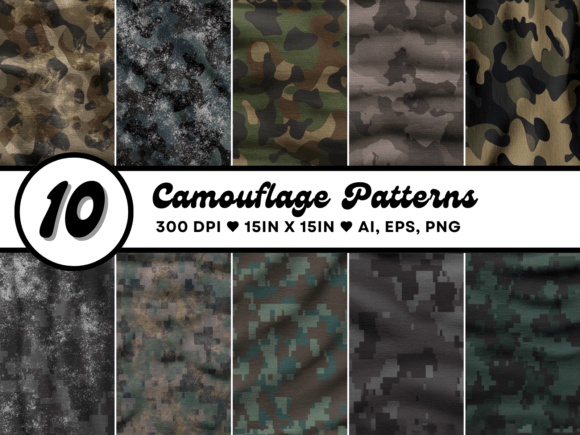
One size does not fit all when it comes to camouflage. Different environments demand different strategies, and your design work should reflect that versatility. This collection includes four distinct variations, each tailored to specific atmospheric conditions and aesthetic goals.
Jungle Military Camo
The standard jungle military camo remains the most recognizable silhouette in tactical design. It features deep greens, browns, and blacks that mimic the dense foliage of tropical rainforests. This pattern is ideal for designs focused on stealth, survival, or historical military themes. It evokes a sense of mystery and danger, making it perfect for thriller book covers, adventure game interfaces, or outdoor brand identities.
Digital Camouflage
Gone are the days of simple pixelated blocks. Modern digital camouflage utilizes complex algorithms to create jagged, multi-tonal shapes that confuse the human eye at varying distances. This style represents technology and modern warfare. It is highly effective for tech-focused military projects, futuristic UI elements, or branding that wants to project innovation and precision. The sharp edges of digital camo translate well to vector graphics and high-contrast digital displays.
Desert Camouflage
For arid environments, the desert variation speckled with sand tones offers a warm, earthy palette. Featuring shades of tan, beige, and ochre, this pattern captures the harshness of the desert sun. It is excellent for creating a gritty, rugged atmosphere. Use this pattern when you want to convey endurance, heat, and resilience. It works beautifully as a backdrop for text-heavy designs where readability must be maintained against a textured surface.
Arctic Camouflage
Finally, the arctic camouflage introduces a coating of snow frost to the mix. Dominated by whites, light grays, and subtle blues, this pattern brings a cold, sterile feel to your work. It is less about hiding in the dark and more about blending into the blinding light of winter. This is a unique choice for winter sports brands, sci-fi concepts involving frozen planets, or campaigns highlighting extreme weather preparedness.
Practical Applications for Creators and Entrepreneurs
The utility of 3D Camo Camouflage Patterns extends far beyond traditional military applications. Creative professionals can adapt these assets to serve a wide array of industries and goals. The key is to understand the psychological impact of camouflage: it suggests strategy, protection, and hidden strength.
Marketing and Branding: Small business owners and marketers can use these textures to create limited-edition packaging or promotional materials. Imagine a sneaker brand releasing a "Stealth Edition" line featuring digital camo textures. The 3D aspect adds a premium feel that justifies higher price points. Similarly, a blog or publisher could use jungle camo backgrounds for articles related to exploration or history, immediately setting the mood for the reader.
Education and Training: Educators developing courseware for military academies or survival training programs require accurate visual aids. Using realistic 3D patterns allows instructors to demonstrate terrain adaptation effectively. Students can better understand how different environments affect visibility when they see the patterns rendered with proper lighting and texture.
Hobbyist Projects: For freelancers and hobbyists involved in 3D modeling, gaming, or cosplay, these patterns are indispensable. They save hours of time that would otherwise be spent manually painting textures. By importing these seamless files directly into software like Blender, Unity, or Photoshop, creators can focus on the composition and storytelling of their project rather than getting bogged down in technical details.
Ensuring Clarity and Consistency
While the visual impact of camouflage is powerful, there is a risk of overwhelming the viewer. To keep your results clear, effective, and organized, consider the following guidelines:
- Balance Texture and Content: High-resolution 3D textures can be busy. Ensure your typography or primary call-to-action elements have enough contrast to remain legible. Sometimes, overlaying a semi-transparent solid color can help ground the text.
- Maintain Context: Choose the camouflage type that matches your narrative. Using arctic camo for a summer camping guide will confuse your audience. Consistency between the visual theme and the message builds trust.
- Optimize for Web: Even though these are high-resolution, ensure you export optimized versions for web use to maintain fast load times. Use appropriate file formats like JPG or WebP for photographic textures.
- Stay Original: Avoid generic clichés by mixing patterns or altering opacity. You might combine a subtle digital camo with a rough paper texture to create a unique hybrid style that stands out from standard military stock photos.
By treating these patterns as foundational tools rather than mere decorations, you elevate the quality of your output. The goal is to create work that feels intentional and professional. Whether you are building a website, designing a product, or crafting a story, 3D Camo Camouflage Patterns provide the structural integrity needed to support your creative vision.
In conclusion, the value of these assets lies in their ability to bridge the gap between digital abstraction and physical reality. They offer a versatile toolkit for anyone looking to inject a sense of realism and tactical sophistication into their work. With the right application, these seamless, textured patterns become the backbone of compelling visual communication.