Topographic Maps Patterns: A Versatile Design Resource for Modern Projects
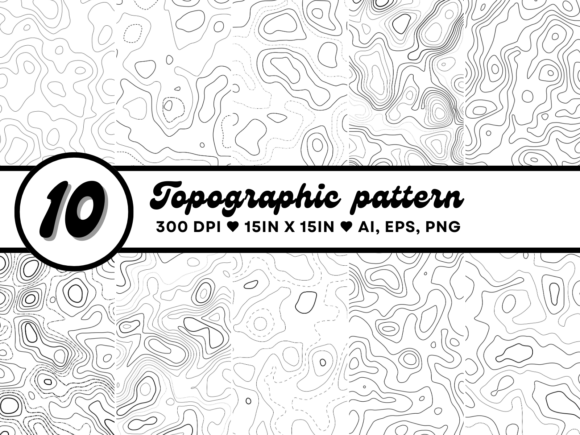
In the world of visual design, finding a background that balances complexity with clarity is often a challenge. Designers frequently search for textures that add depth without overwhelming the primary content. Topographic Maps Patterns have emerged as a unique solution to this problem. This specific collection offers a set of 10 seamless vector patterns featuring linear contour maps. These designs are ideal for anyone looking to incorporate a clean, minimal, yet eye-catching aesthetic into their work. Whether you are a seasoned graphic designer or a small business owner creating marketing materials, understanding the utility and application of these patterns can significantly streamline your creative workflow.
Understanding the Core Concept
At its heart, a topographic map represents the three-dimensional shape of the earth's surface on a two-dimensional plane. When translated into a design pattern, these contours create a sense of movement, layering, and structure. The Topographic Maps Patterns discussed here simplify this complex geographic data into elegant, linear lines. This abstraction removes the clutter of labels and specific terrain details, leaving behind a purely graphical element that suggests elevation and flow.
The appeal of this style lies in its versatility. Unlike photographic backgrounds that compete for attention, these linear patterns act as a subtle foundation. They provide a sophisticated texture that feels both technical and organic. For creators seeking a "clean" look, these patterns offer a way to add visual interest without sacrificing readability or modern simplicity. The result is a design element that feels professional and curated, suitable for high-end branding or casual web aesthetics alike.
Technical Features and Workflow Integration
One of the most significant advantages of using Topographic Maps Patterns is the flexibility they offer across different software environments. In the digital age, efficiency is paramount. Designers need assets that fit seamlessly into their existing toolkits, whether that involves industry-standard software like Adobe Illustrator or Photoshop, or lighter image editing tools.
This product is designed with a multi-format approach to ensure maximum compatibility:
- Vector Scalability: The inclusion of EPS and AI format files means the patterns are fully scalable. You can use them in large-scale prints, such as billboards or banners, or shrink them down for mobile app icons, with absolutely no loss in quality. Vector graphics are defined by mathematical equations rather than pixels, ensuring crisp edges at any zoom level.
- Editability: Because the source files are vectors, they are not static images. In Adobe Illustrator, users can edit stroke lines, adjust weights, or convert solid lines to dashed lines. This allows for deep customization, enabling you to match the pattern exactly to your brand's color palette or line weight preferences.
- Raster Options: For those who prefer working in pixel-based environments, the package includes .PSD pattern tiles. These allow for easy integration into Photoshop workflows, where you can apply layer masks, blending modes, and filters to alter the appearance of the map lines.
- Universal Formats: To accommodate a wider range of users, high-resolution JPG, PNG, and SVG files are provided. These formats are universally supported by almost any image editing software, web browser, or presentation tool, making it easy to use the patterns even if you do not own the full Adobe Creative Cloud suite.
Practical Applications Across Industries
The adaptability of Topographic Maps Patterns makes them applicable to a vast array of industries. Their ability to serve as a background while maintaining legibility makes them particularly valuable in sectors where information density is high.
Branding and Packaging
For businesses aiming to project an image of precision, exploration, or innovation, these patterns are an excellent choice. Imagine a craft beer label featuring a subtle topographic background to suggest local terrain, or a tech startup's packaging that uses the lines to imply connectivity and data mapping. The patterns work well on wrapping paper, corporate stationery, and product boxes, adding a tactile feel to physical goods.
Fashion and Textiles
The fashion industry constantly seeks new textures. The linear nature of these contour maps translates beautifully to fabric printing. Whether used for athletic wear that mimics performance tracking or high-fashion streetwear, the patterns offer a modern, geometric vibe. Because the vector files allow for endless tiling, designers can scale the size of the contours to create anything from a fine micro-pattern to a bold, large-scale print.
Digital and Web Design
On the web, heavy images can slow down page load times. However, SVG versions of these patterns are lightweight and render instantly. Using Topographic Maps Patterns as a website background can give a landing page a distinctive character without compromising performance. They are also effective for printable resources, such as planners, journals, and educational posters, where the grid-like structure helps organize content visually.
Evaluating Suitability for Your Project
While these patterns are highly versatile, it is important to consider how they interact with other design elements. The primary strength of Topographic Maps Patterns is their subtlety. If your project relies on bold, chaotic imagery, a structured contour map might feel too rigid. Conversely, if your design is too plain, these patterns can provide the necessary grounding.
When evaluating suitability, ask yourself the following questions:
- Contrast Requirements: Will your text or main logo stand out against the lines? Since the patterns consist of thin strokes, light-colored text may get lost. It is often best to use dark text over light patterns or vice versa, or to place a semi-transparent overlay between the pattern and the text.
- Brand Alignment: Does the "map" aesthetic align with your brand identity? This style naturally evokes themes of travel, geography, engineering, and strategy. Ensure this thematic association supports your message.
- Scalability Needs: Do you need to print this at a very large size? If so, relying on the vector EPS or AI files is crucial to avoid pixelation. Raster formats like JPG should only be used for screen displays or small prints unless the resolution is exceptionally high.
Maximizing Value Through Customization
The true power of this resource lies in its editability. Rather than accepting the patterns exactly as they come, users are encouraged to tweak them to fit their specific needs. In Adobe Illustrator, you can change the stroke color to match a brand's secondary color, or adjust the spacing between the contour lines to make the pattern denser or more open. This level of control transforms a generic stock asset into a custom-branded element.
Furthermore, the ability to mix these patterns with other design elements opens up creative possibilities. Combining a topographic pattern with a solid color block, a gradient, or a photograph can create a layered, magazine-style layout. The seamless nature of the tile ensures that when repeated, there are no visible breaks or seams, which is critical for backgrounds that span across multiple screens or pages.
Conclusion
Topographic Maps Patterns represent a bridge between functional cartography and artistic expression. By providing a set of 10 seamless vector patterns available in multiple formats, this collection caters to a wide spectrum of user needs, from the professional graphic designer requiring precise vector control to the hobbyist needing simple, high-quality PNGs for a personal blog. The emphasis on clean, minimal design ensures that these patterns remain relevant in modern trends that favor simplicity and functionality. Whether applied to fabric, packaging, or a digital interface, these patterns offer a reliable, time-saving solution that adds a touch of sophistication to any project.